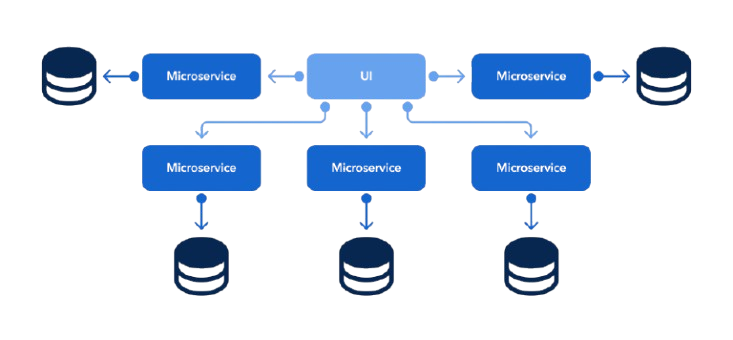
Designing distributed systems that scale, evolve, and operate reliably in real-world environments.
Microservices architecture is an approach to building applications as a collection of small, independent services that communicate with each other through well-defined APIs. Each service is responsible for a specific business capability and can be developed, deployed, and scaled independently. My focus is on designing microservice systems that are practical, maintainable, and production-ready — not overly complex by default.
I design microservice architectures with real-world constraints in mind: team size, deployment complexity, operational overhead, and long-term maintainability. When done correctly, microservices enable faster development, better fault isolation, and independent scalability. When done incorrectly, they can introduce unnecessary complexity. My goal is to apply microservices only where they add real value.
Microservices are not just about splitting code — they require thoughtful system design, service boundaries, data ownership rules, and reliable communication patterns. I focus on building systems that are resilient, observable, and easy to evolve as business requirements change.
Why My Microservices Approach Works?
Clear Service Boundaries
Each service is designed around a single business responsibility, avoiding tight coupling and overlapping logic.
Independent Scalability
Services can scale independently based on load, improving performance and resource efficiency.
Fault Isolation & Resilience
Failures in one service do not bring down the entire system, improving overall reliability.
Technology Flexibility
Different services can use different technologies when appropriate, without affecting the whole system.
Production-Oriented Design
I design microservices with deployment, monitoring, and long-term operations in mind.